Discover why custom orthotic insoles provide better biomechanical support
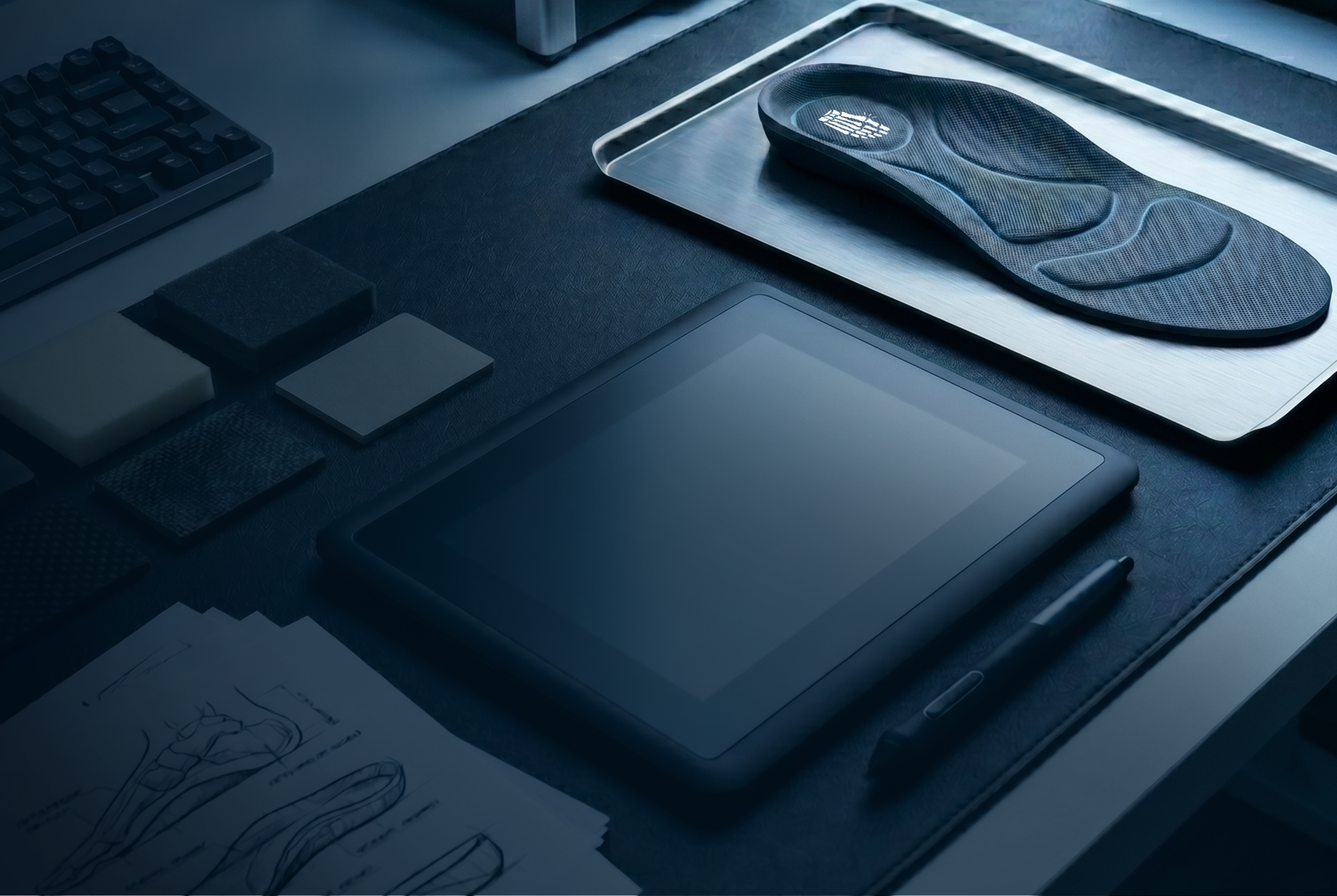
Before comparing their benefits, it is important to understand how these two types of insoles differ.
Generic insoles, also known as over-the-counter insoles, are mass-produced products designed to accommodate a wide variety of foot types. They typically focus on providing additional cushioning or basic arch support.
These insoles are manufactured using standard shapes and dimensions without considering an individual's unique anatomy or biomechanical needs.
Custom orthotic insoles are developed using patient-specific data obtained through methods such as:
3D foot scanning
Foam box impressions
Plaster casting
Digital foot measurements
Clinical biomechanical assessments
The resulting orthotic is designed specifically for the individual, incorporating customized support structures, pressure redistribution features, and biomechanical corrections based on clinical requirements.
Every foot is unique.
Differences in arch height, foot shape, pronation patterns, pressure distribution, and gait mechanics mean that no single insole design can effectively support every individual.
Generic insoles are designed around average foot shapes, which often results in incomplete or inconsistent support.
Custom orthotic insoles are built specifically around the patient's anatomy, allowing for:
Accurate arch support
Improved heel positioning
Better foot alignment
Enhanced pressure distribution
Personalized correction features
Because the device is designed specifically for the user, support is delivered exactly where it is needed most.
One of the primary goals of a custom orthotic insole is to improve biomechanical function.
Foot mechanics influence the entire kinetic chain, including the ankles, knees, hips, and lower back. Even small biomechanical abnormalities can contribute to discomfort, fatigue, and inefficient movement patterns.
Custom orthotics can be designed to help address issues such as:
Excessive pronation
Excessive supination
Arch instability
Heel misalignment
Forefoot imbalances
Leg length discrepancies
By improving foot alignment and controlling abnormal motion, custom orthotic insoles can support more efficient movement and reduce unnecessary strain on surrounding joints and soft tissues.
Pressure management is an important consideration in orthotic design.
Certain areas of the foot naturally experience higher pressure during standing, walking, and running. If pressure becomes concentrated in specific regions, discomfort and tissue stress may develop over time.
Custom orthotic insoles can be designed to redistribute pressure more effectively by incorporating:
Pressure relief zones
Metatarsal support
Heel accommodations
Arch support structures
Offloading modifications
This customized pressure management helps improve comfort while supporting healthier load distribution across the foot.
Comfort is one of the most noticeable differences between custom and generic insoles.
Generic products may initially feel comfortable due to additional cushioning, but they often fail to provide adequate structural support during prolonged use.
Custom orthotic insoles are designed to balance both support and comfort by matching the contours of the foot and addressing individual biomechanical needs.
Many users experience benefits such as:
Reduced foot fatigue
Improved standing comfort
Better walking efficiency
Increased stability
Greater overall comfort throughout the day
This can be especially valuable for individuals who spend extended periods on their feet.
Many foot-related conditions require targeted support that generic insoles cannot provide.
Custom orthotic insoles can be developed to address a wide range of clinical requirements, including:
Plantar fasciitis
Flat feet
High arches
Metatarsalgia
Posterior tibial tendon dysfunction
Hallux valgus support considerations
Diabetic foot pressure management
Sports-related biomechanical concerns
Because custom orthotics are designed around the patient's specific condition, they can provide a more tailored and effective solution.
Generic insoles are often manufactured using materials intended for mass-market distribution and may wear down relatively quickly under regular use.
Custom orthotic insoles are typically produced using professional-grade materials selected according to the patient's weight, activity level, footwear requirements, and clinical objectives.
Benefits may include:
Greater structural stability
Improved longevity
Better performance retention
Reduced need for frequent replacement
Although custom orthotics generally require a higher initial investment, their durability often provides better long-term value.
Advancements in digital technologies have significantly improved the development of custom orthotic insoles.
Modern workflows often combine:
3D foot scanning
Digital biomechanical assessments
Orthopedic CAD design
Manufacturing-ready CAD file development
CNC machining
3D printing technologies
These digital processes allow clinicians and CAD developers to create highly accurate, repeatable, and customizable orthotic solutions that would be difficult to achieve using generic products.
One major advantage of digital custom orthotic development is the ability to reproduce and modify designs efficiently.
When patient data is stored digitally, clinicians can:
Retrieve previous cases
Make design adjustments
Update correction parameters
Produce replacement devices
Track long-term treatment progress
This level of consistency is rarely possible with off-the-shelf insoles.
Athletes and active individuals often place significant demands on their feet and lower limbs.
Custom orthotic insoles can be designed to support sport-specific requirements by improving:
Stability
Force distribution
Motion control
Foot positioning
Overall comfort during activity
Whether used in running, walking, hiking, workplace environments, or athletic footwear, customized support can help optimize performance and comfort.
The custom orthotic development process typically begins with a comprehensive assessment of the patient's feet and biomechanics.
The workflow may include:
Foot assessment and clinical evaluation
3D foot scanning or impression capture
Digital orthopedic CAD development
Biomechanical correction implementation
Manufacturing-ready file preparation
CNC machining or 3D printing production
Final fitting and evaluation
This structured process ensures that every orthotic is developed according to the individual's specific needs.
At Biomech Studio, we support clinics, podiatrists, orthotists, pedorthists, and orthopedic manufacturers by transforming patient scan data into accurate, manufacturing-ready orthotic CAD solutions.
Our expertise includes:
Custom orthotic insole CAD development
Scan-based orthopedic modeling
Biomechanical correction implementation
Orthotic CAD modifications
Manufacturing-ready CAD file preparation
STL, OBJ, and STEP workflow support
By combining clinical requirements with advanced orthopedic CAD design, we help create custom orthotic solutions that are optimized for modern manufacturing workflows.
While generic insoles may provide temporary cushioning and basic support, they are designed to accommodate broad populations rather than individual needs. Custom orthotic insoles offer a far more personalized solution by addressing unique foot anatomy, pressure distribution, and biomechanical requirements.
Through precise design, improved alignment, targeted support, and modern digital development methods, custom orthotics can provide significant advantages in comfort, function, and long-term performance.
For clinics, podiatrists, orthotists, and footcare professionals seeking the highest level of customization and accuracy, custom orthotic insoles remain the gold standard for modern foot support and biomechanical care.