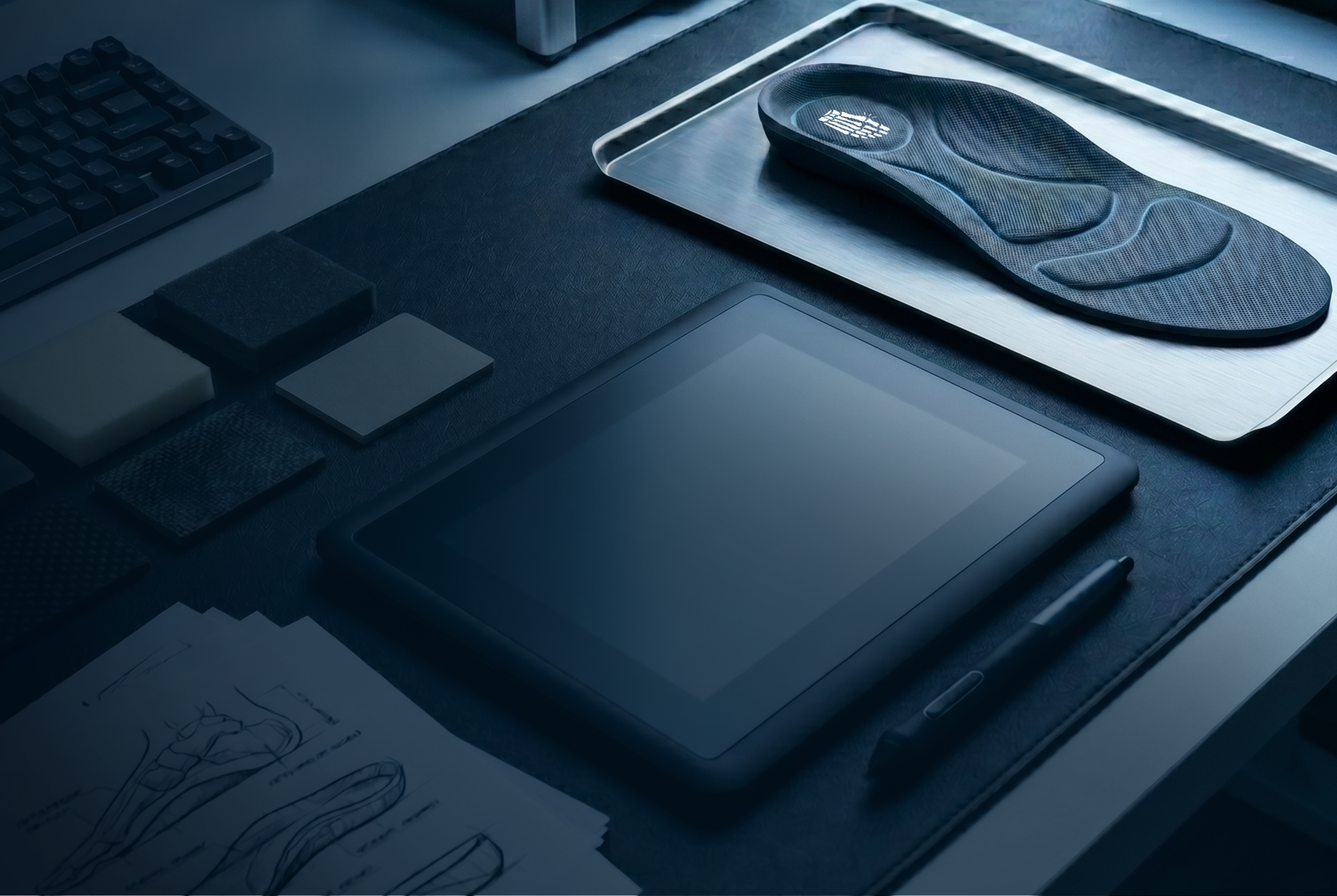
Biomechanical correction plays a critical role in developing effective orthopedic footwear solutions.

In modern footcare and orthopedic development, biomechanical correction has become one of the most important elements of custom orthotic design. Every foot is different, and even small alignment issues can affect comfort, movement, pressure distribution, and long-term foot health. That is why modern orthopedic CAD workflows focus on creating customized solutions based on each individual’s anatomy and functional needs.
Unlike generic insoles, custom orthopedic designs are developed to support the natural structure and movement of the foot. Using advanced CAD software and scan-based workflows, orthopedic professionals can create more accurate and personalized correction systems designed for both comfort and functionality.
Biomechanical corrections are design modifications added to orthotic insoles or orthopedic footwear to improve foot alignment, reduce pressure concentration, and support more efficient movement. These corrections are based on factors such as foot posture, gait patterns, pressure areas, and overall biomechanical function.
The goal is not only to improve comfort but also to help create better balance, support, and stability during everyday movement.
Common biomechanical correction features may include:
Each correction is carefully integrated into the digital design workflow depending on the patient’s specific needs and clinical requirements.
Traditional orthopedic fabrication methods often relied heavily on manual adjustments and physical modifications. While effective in many cases, those workflows could sometimes lead to inconsistencies and longer production times.
Today, digital orthopedic CAD development provides a much more precise and scalable approach.
Using advanced 3D scan technology and CAD modeling software, orthopedic designers can work directly from detailed anatomical data. This allows for more accurate customization and smoother communication between clinics, practitioners, and manufacturers.
At Biomech Studio, scan-based workflows help streamline the entire orthopedic development process while maintaining high levels of technical precision and manufacturing compatibility.
Even small biomechanical adjustments can make a significant difference in how an orthotic device performs. Properly designed corrections can help improve weight distribution, reduce stress on pressure-sensitive areas, and support more natural movement patterns.
For many practitioners, precision is especially important when working with:
Modern CAD workflows allow these modifications to be developed with far greater control and repeatability compared to traditional manual processes.
3D scanning technology has transformed the orthopedic industry by making customization faster and more accurate. Digital scans capture detailed foot geometry that can then be refined inside orthopedic CAD software for precise correction development.
This digital workflow offers several advantages:
Manufacturing-ready CAD files can also be optimized for CNC machining, 3D printing, and modern orthopedic production systems.
At Biomech Studio, biomechanical principles are integrated into every stage of the orthopedic CAD development process. Our focus is creating accurate, production-ready digital solutions for podiatrists, orthotists, clinics, and footwear manufacturers.
We specialize in:
By combining digital precision with practical orthopedic workflow experience, we help support modern footcare professionals with scalable and reliable CAD solutions.
As orthopedic technology continues to evolve, digital customization is becoming increasingly important for both clinics and manufacturers. Modern CAD workflows make it possible to create more precise, efficient, and repeatable orthopedic solutions while improving communication across the entire production process.
The future of orthopedic development is moving toward:
With advanced CAD systems and scan-based technologies, orthopedic professionals now have the ability to deliver highly detailed and manufacturing-ready solutions that were difficult to achieve with traditional workflows alone.
Biomechanical correction is at the core of effective orthopedic CAD design. Through modern digital workflows, advanced scan processing, and precise CAD modeling, custom orthopedic solutions can now be developed with greater accuracy, consistency, and efficiency than ever before.
As demand for personalized footcare continues to grow, biomechanical CAD development will remain a key part of the future of orthopedic innovation and modern manufacturing.